Whole-House Automatic Transfer Switch Install in Suffolk
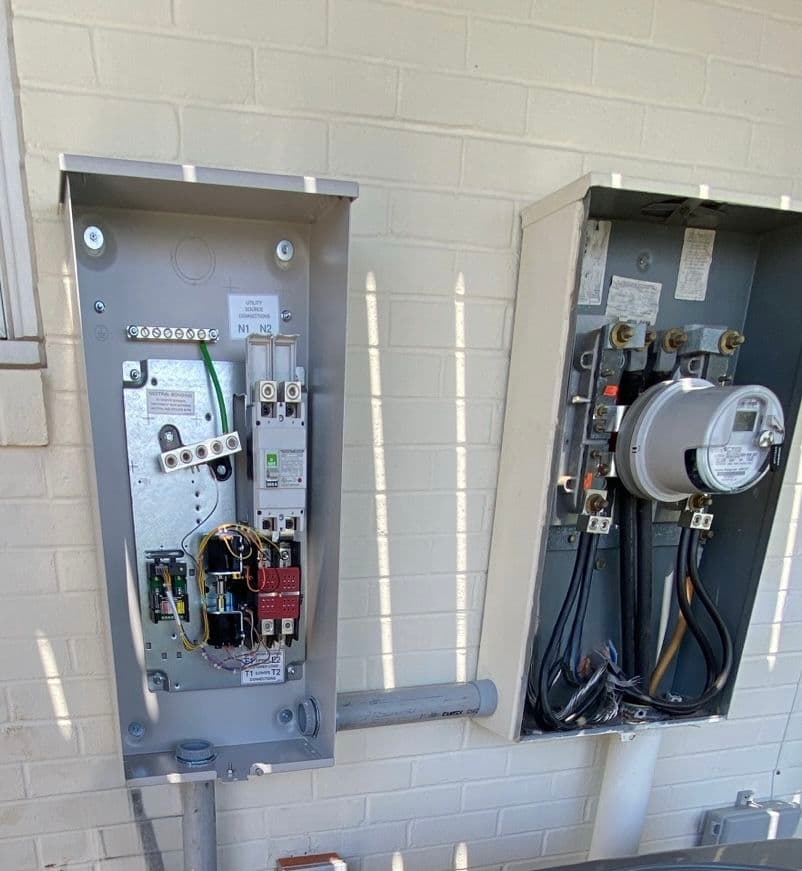
Most homeowners with a generator are running it the risky way - extension cords, manual switching, or worse, nothing at all. We installed an automatic transfer switch on a whole-house generator setup in Suffolk, and the difference between what this homeowner had before versus what they have now is significant.
Here's what an automatic transfer switch actually does. When utility power drops, the ATS detects it almost instantly and signals the generator to start. Then it transfers the load over - cleanly, safely, without you doing a thing. No running outside in a storm, no plugging cords into the side of your house, no guesswork. The whole house just keeps running.
The installation side of this is more involved than it looks. The ATS has to sit between the utility meter and your main panel, properly wired so it can safely switch between two power sources without back-feeding the grid. That last part matters a lot - back-feeding is dangerous for utility workers and can cause serious damage. Getting this right requires knowing exactly what you're doing.
What we ended up with for this Suffolk homeowner is a clean, code-compliant setup that gives them real peace of mind. The neutral bonding, the T1/T2 load connections, the utility source terminals - everything is properly configured so the system operates exactly the way it should when an outage hits. No workarounds. No compromises.
If you've got a generator sitting in your garage or already installed outside, the transfer switch is what turns it from a basic backup tool into a true whole-home power solution. It's one of those upgrades that you won't think about until the lights go out - and then you'll be glad you didn't wait.